
Apple Map Guide Found in Link.
Locust Point is one of Baltimore’s oldest and most historic neighborhoods. It is only natural that a collection of supernatural stories would pop up over the past three centuries. Read on to find out more about some of the spots rumored to have a scary story associated with them, whether it be Halloween, Summerween, or any time in between. Have a story of your own? Please share in the comments!

1. FORT MCHENRY


We might as well state the obvious spot first, since Fort McHenry is always listed among Baltimore’s most haunted spots.
Best remembered as the birthplace and inspiration of our country’s national anthem, The Star-Spangled Banner, Fort McHenry is one of the most often-cited “haunted places” in Baltimore due to its long history in this early American city.
During the War of 1812, four Americans died defending the fort from British bombardment and invasion, Lt. Levi Clagett, citizen soldier Sergeant John Clemm, Privates Charles Messenger and Thomas V. Beason.
“I am happy to inform you (wonderful as it may appear) that our loss amounts to four men killed, and 24 wounded.” Lt. Colonel George Armistead, Sept. 24, 1814.
”Shrapnel the size of a silver dollar tore through Sergeant John Clemm killing him on the spot. These were citizen soldiers, two of the four men killed during the bombardment and were prominent flour merchants and investors in Baltimore’s Privateer trade.” – Baltimore Patriot, 1814
Since that historical moment when the Star Spangled Banner was penned, occupants and visitors to the star-shaped fort have reported some unexplained phenomenon. Hauntings at the fort include reports of seeing the ghost of Lieutenant Levi Claggett, killed by a mortar that hit the cannon where he was standing. Park Rangers and visitors to the park claim to have seen him standing guard at his post, keeping watch along the waterfront for enemy invasion, and hearing footsteps of the fallen soldier guarding Baltimore for eternity.
Locals may recognize Beason Street, running east/west in Locust Point, named for the fallen soldier Thomas V. Beason. The Sun newspaper chronicled an 1872 occasion where a passerby noticed “ while walking in South Baltimore within an old burying ground near Fort Avenue and Webster Street a crumbling tombstone, upon which was deciphered the name of “Thomas V. Beeson.” The Association of the Old Defenders’ of 1814 at once made arrangements for the re-interment of the remains to Mount Olivet Cemetery on Frederick Road west of the city. The remains were transferred to a handsome casket and were re-entered with appropriate ceremonies.”.

During the American Civil War, the lower levels of the fort, often dark and dank, were used as a prison. Several prisoners were said to have been executed there l, which can give off an eerie feeling while sightseeing the old buildings. Reports of hearing screams and hearing footsteps have been said to occur.
Another tale that is told about Fort McHenry is the story of a soldier, Private John Drew, who was caught sleeping during his command in the 1880’s. For the dereliction of his duties, he was placed in the Fort’s jail as punishment. Overcome with shame, he is said to have committed suicide in the jail using a rifle. Some claim he can be seen in the cell where he died and others say he can be see. pacing back and forth on deck, where he fell asleep.

The Fort’s dark history also includes the time, in 1919, when the Spanish Flu epidemic caused the fort to be used as a hospital. Not only did patients die, but many nurses who tended to the sick also died from the disease themselves. While little is know about her, the spirit of the wife of a non-commissioned officer whose children died during an epidemic has been said to take her grief out on the living at Fort McHenry in a hostile manner and is feared to push people down the stairs and knock others unconscious.

For the many thousands who visit Fort McHenry each year unaware or unthinking about the many tragedies and misfortunes that have occurred on such sacred land, it is best to beware and be respectful of spirits from the past that haunt the star-crossed site.
2. LATROBE PARK ENTRANCE AND CENTRAL GROVE
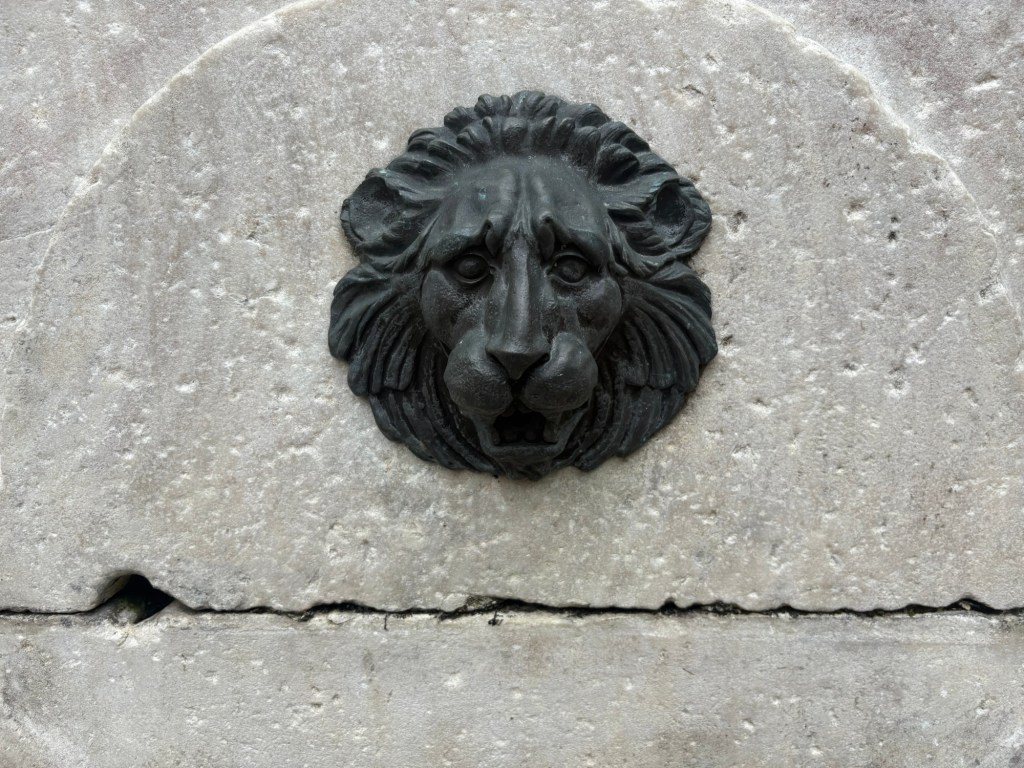
The entrance to Latrobe Park along Fort Avenue and the park itself are short on ghost known stories but provide a perfect setting to gather for haunted walk of Locust Point. The original central “grove” area and fountain, featuring an interesting lion head,still exists. Latrobe Park was named after Baltimore Mayor Ferdinand Latrobe in 1902. It was designed originally by Olmstead Brothers Landscspe Architects, Family of Frederick Law Olmstead who designed Central Park in NY. While there are no specific ghost stories to share, a stroll along the dimly lit, wooded, front of the park on Fort Avenue and through the central grove at night will certainly send shivers down your spine.
3. THE FUNERAL HOME
A family-owned funeral parlor, The Charles L. Stevens Funeral Home, sits along Fort Avenue where Hull Street dead ends and dates back to the 19th century . This neighborhood funeral parlor, aptly located in a traditional Baltimore row home, is where many Locust Point families have said their final goodbyes over the years. Whispers from grieving souls gathered out front to pay their respects, the faint ringing church bells, and cars forming long processional lines characterize this corner.
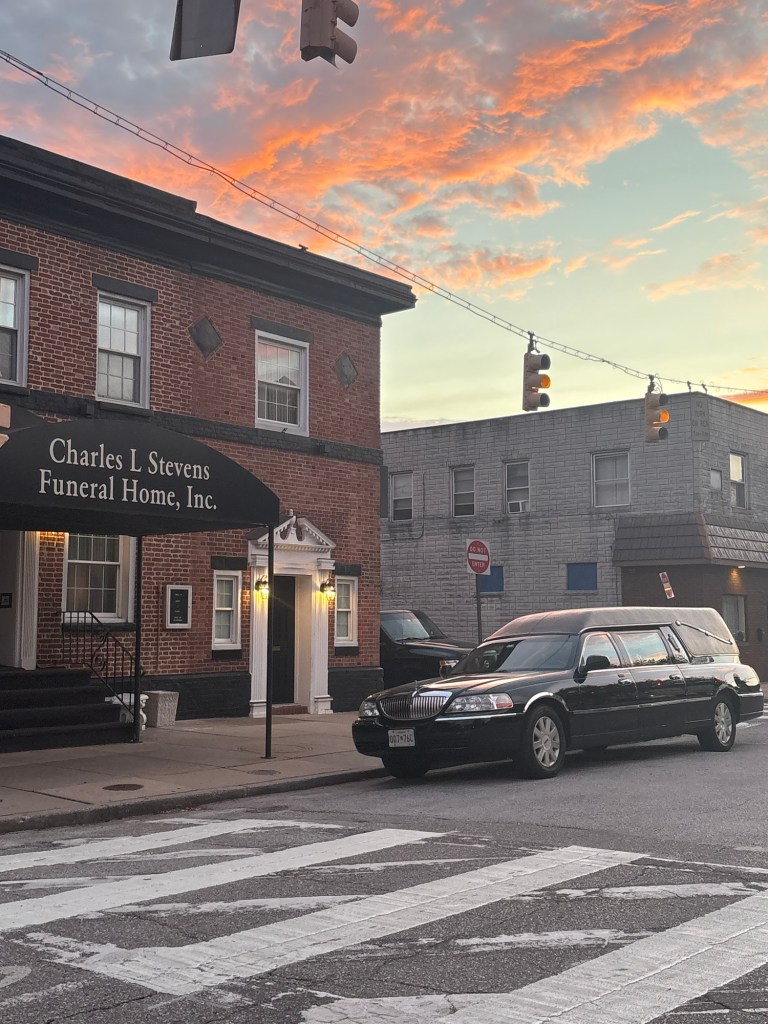
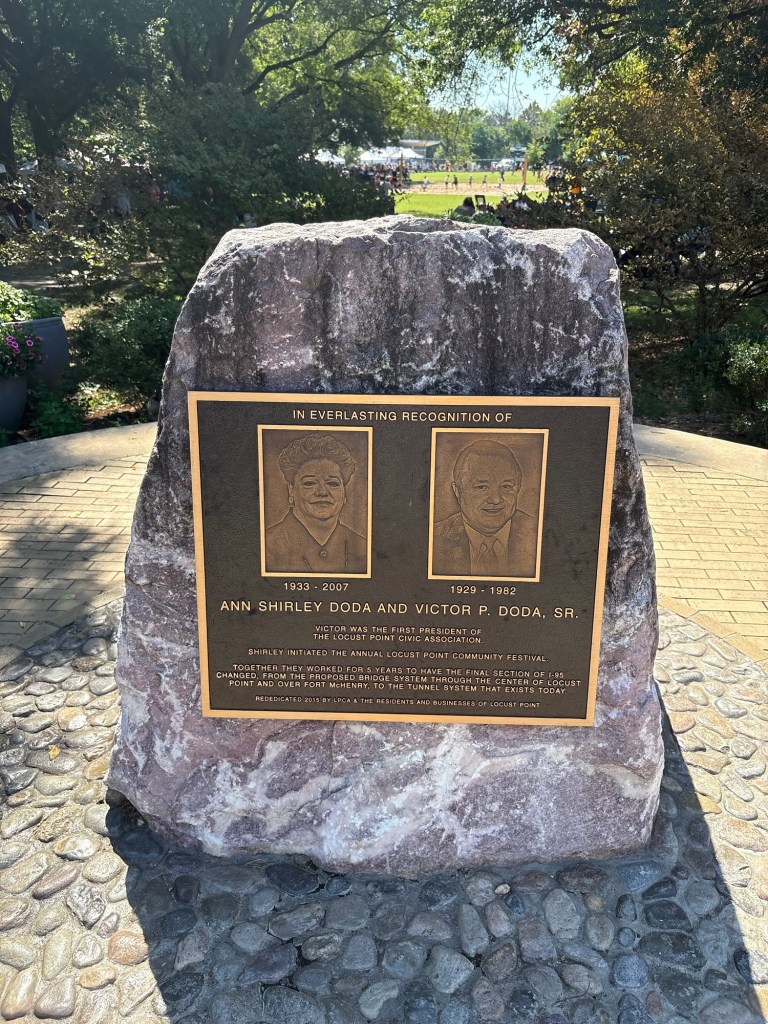
Local lore about the original family matriarch, in her time, was that “If Nell Stevens doesn’t bury you, you don’t go to heaven.” Neighborhood talk reveals that Locust Point was so close knit in the past, people would often conduct real estate transactions in the funeral parlor because you would have to wait until a family member died in order for a property to change hands. A memorial dedicated to members of the Doda family, proprietors, can be seen steps away from the business in Latrobe Park to recognize their many contributions to the community.
4. OUR LADY OF GOOD COUNSEL CATHOLIC CHURCH
Our Lady of Good Council Catholic Church is part of the Catholic Community of South Baltimore parish. The historic church’s cornerstone was laid in 1889 by Cardinal John Gibbons He was an early leader in the Catholic Church in the Archdiocese of Baltimore, which is the first diocese established in the United States and in the colonies. The parish grew out of a need to serve the many German immigrants in the area.
An unusual or curious fact about Locust Point and the South Baltimore peninsula is that it lacks cemeteries and graveyards on land that has been home to a considerable population for hundreds of years. Several cemeteries dating far into Baltimore’s earliest years are scattered across the City but none are present or remain in Siuth Baltimore. Since 1890, around the same time that Our Lady of Good Counsel was constructed, the Catholic Community of South Baltimore has been connected to the 47-acre Holy Cross Cemetery several miles south in Glen Burnie. A video link recently uploaded to YouTube shared a peaceful walk through the cemetery with many old gravestones too difficult to read. The Holy Cross cemetery was also featured on an episode of the Netflix series called The Keepers, the viral series about the murder of Sister Cathy Cesnik and systematic child abuse and related cover ups in the Baltimore Archdiocese, including acts committed. Y prominent priest Joseph Maskel. While leading the Holy Cross parish in the 1980’s-90’s he ordered thousands of documents to be buried and hidden in the cemetery with personal information about students and parishioners. Teams were later sent to uncover the documents as discussed in the Netflix series and locally on WMAR Channel 2 news found at this link.
The attached former Catholic Community School building, that now houses a Montessori preschool and daycare, is the well documented location of terrible acts of child sex abuse committed by convicted Catholic School teacher John Merzbacher in the 1970’s. A 2012 quote from one of his victims reads “I look at that brick and mortar and think someone should tear it down. Too much evil occurred inside that building for it to remain standing.”. She also said that “She hoped that the former students’ presence could help make the space “holy,”. Presently, the church just survived a round of closures by the Archdiocese in 2024 due to declining attendance after significant community activism to keep it open…and hopefully heal the traumas of the last.

5. THE PORT OF BALTIMORE
The Port of Baltimore, which gave rise to Baltimore’s industrial waterfront and rust belt image, has been the setting of tragic deaths among the longshoreman and dock workers who earn their living from the vessels that bring cargo ashore.
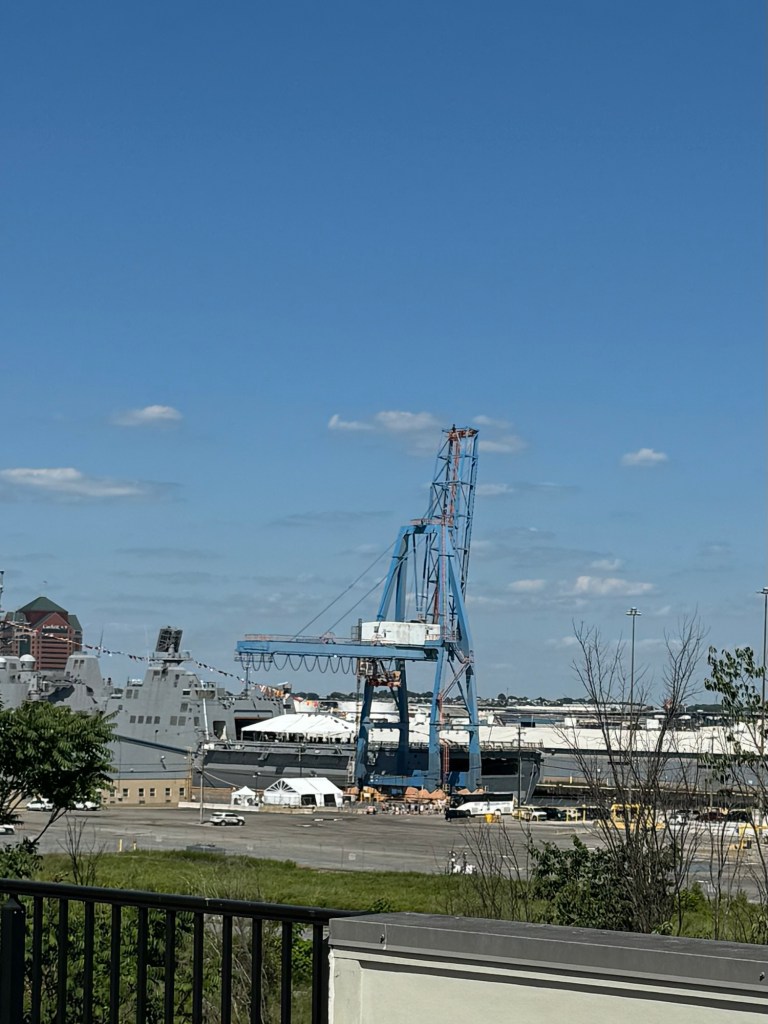
In 1978, four men died working the Baltimore port. At the Locust Point terminal, a longshoreman was tragically crushed by a falling hatch beam. Also that year, a port chaplain, lamented the loss of three seafarers who were killed aboard a Greek ship down in the hold when explosion occurred and toxic fumes filled the air. The holyman yhad to talk and console the dead men’s wives, who had come along on the trip from the Mediterranean.
Countless others have lost their lives doing this dangerous work. So many so, that local funeral homes used to hire longshoremen to act as pallbearers when needed. Their presence still lingers, with sounds of heavy chains rattling along the docks.
More recently in March 2024, 6 construction workers were killed when the Francis Scott Key Bridge was struck by the incapacitated cargo ship, the Dali, shockingly causing the bridge to collapse into the dark waters of the Patapsco River. This tragic event was seen around the world, captured on video, leaving behind family and friends to grieve and others to ponder the magnitude of what had occurred.

Since then, the area near the ruins of the bridge feels like Baltimore’s version of the Bermuda Triangle. In 2025, a freighter carrying coal through the shipping channel exploded, causing smoke and fire to be seen and heard for some distance. Only months later, another distress call came into the Coast Guard and local authorities of a recreational boat taking on water and six passengers had to be rescued from the waters off of Fort Armistead Park, below the site of the former bridge. These incidence lead some to believe that this part of the harbor seems to be cursed by troubles and misfortune.
6. GHOST TRAINS
Train horns and sounds from the locomotives can be heard at night in Locust Point, whistling eerie and ominous sounds along the screeching metal rails crawling down the tracks.
These freight trains, whose tracks circle the neighborhood like a noose, are part of Locust Point’s industrial character. However another type of train used to travel the neighborhood, creating a sense of sadness and even fear to those it passed.


Back in the days when electric streetcars traveled all across Baltimore City and down Fort Avenue, there was one car in particular that brought stares. Sometimes called the “car of sorrows” but more often referred to as “Delores“, derived from the Spanish saint Mary of Sorrows, the first and only electric rail funeral car began service in 1900. This service was sometimes needed for families that did not own cars before they were commonplace, and was a respectable way to travel from the many churches and funeral homes to local cemeteries, like Baltimore Cemetery and Greenmount Cemetery, scattered across Baltimore.
According to local transit blog Maryland Transit Administration, “Delores contained a zinc-lined casket vault visible through a plate-glass door. Atop the casket vault was a shelf with a guard rail, where flowers could be placed and seen through two large windows. Opposite the casket were eight seats for mourners and separated from the passenger compartment by a carved mahogany and frosted glass partition. The passenger section was furnished with 12 upholstered leather seats and artistic bronze light fixtures helped brighten the somber surroundings.Window tops were etched with frosted drapes, and black shades and curtains could be drawn across the glass for privacy.”

A round-trip use of the funeral streetcar within city limits cost $20 while further suburban locations along the streetcar line cost between $22-25.
Use of the funeral streetcar died out around 1923 and the streetcar was later scrapped and burned in a local transportation yard.
Look carefully when crossing the street on Fort Avenue and you will still see the old metal lines where the streetcars traveled peeking out from under the asphalt.
7. THE BOY SCOUTS HAUNTED HOUSE
The Church of the Redemptiom at 1401 Towson Street.
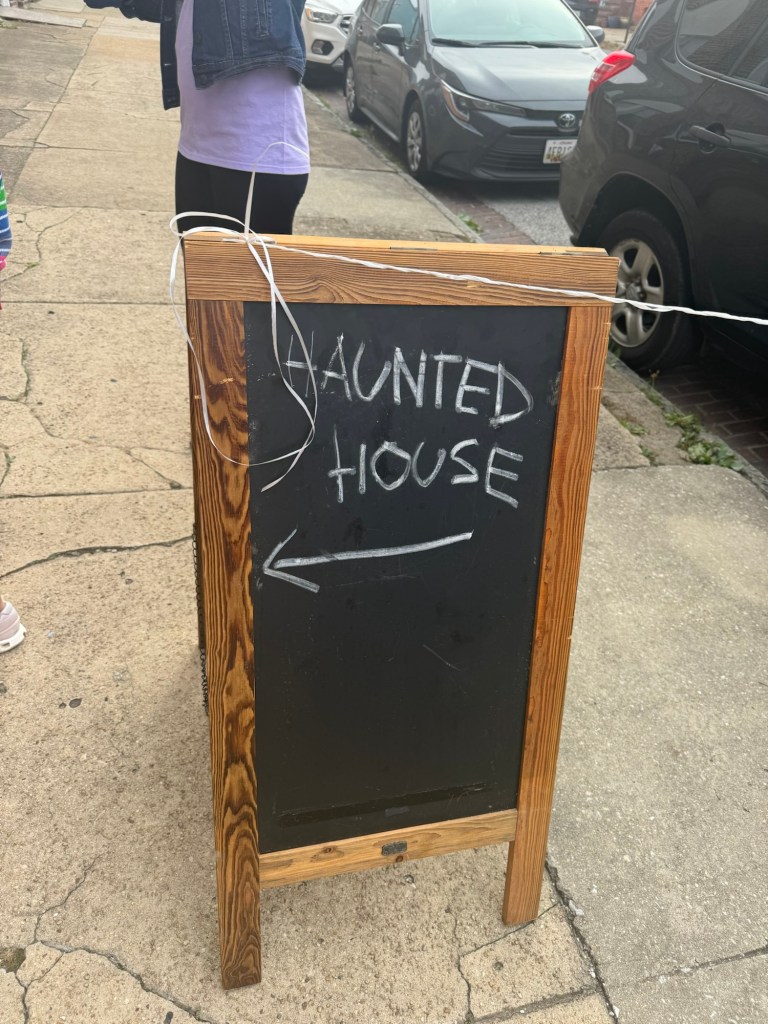
Each year, the local Cub Scout troops put on a terrifying and popular haunted house for one night only. For a few hours every October, a quiet corner of Locust Point is filled with scared and anxious kids (and grown ups too), waiting to find out what scenes of terror and horror await them. They climb an ominous staircase to the second floor where the tour begins wondering what may lie in store.

A new, dark theme, full of suprises, awaits the brave souls who pass through each year. One can expect ghoulish dinners set upon scary tabletops, haunted bedrooms with tapping furniture, jump scares by masked creatures, knocking sounds and screams, flashing lights, and plenty of conjured gore for extra effect.

It always feels that as soon as it begins, the terror is over and the wait begins again for next year’s haunted house.
Footsteps echo through the halls, and shadows dart across the walls long after the building closes its doors. Scary memories and nightmares linger as you hurry along the sidewalk past the building and its yard….. remembering the fear and anticipating next year’s anxiety.
8. REYNOLDS STREET
The Famous Baltimorean Edgar Allan Poe’s final days were spent in Baltimore, in agony, calling out the mysterious name “Reynolds”. He called out this name for some time, while hospitalized in East Baltimore, after a sudden illness described by delirium and hallucinations near the present day sight of Johns Hopkins Hospital. History has never been able to determine who Reynolds actually was or why the writer would be screaming his name. Poe died on October 7, 1849 uttering “Lord, help my poor soul.” without revealing who it was or other circumstances around his death.

While paranormal sightings and experiences associated with the poet near his grave at Westminster Hall (near the University of Maryland Baltimore), Locust Point locals speculate that Reynolds could have been connected to someone living in Locust Point at the time. There is at least some connection to Poe in Locust Point because his wife Virginia’s father, William Henry Clemm, Jr.,is believed to be the brother of the solder who was killed at Fort McHenry during the Battle of Baltimore in 1814, Sergeant John Clemm. Interestingly, a nearby side street, Clemm Street, that runs from Latrobe Park to the elementary school (and behind the local funeral home) is named for Poe’s father-in-law).
Could it possibly be named for Civil War General John Reynolds, who spent time at Fort McHenry early in his career? Perhaps he and Poe knew one another as contemporaries? Poe was known to pass through Baltimore in the 1840’s after having lived there in the decade prior.
There is a street, characterized by older, turn of the 20th century homes, called Reynolds street that intersects with Fort Avenue in the “old” section of the neighborhood. While information exists about street names in Locust Point, record searches do not immediately or easily reveal the origins of the naming of Reynolds Street (formerly Garrett Street). Much like the mystery of Poe screaming “Reynolds” in his mad state, we may never know about how Reynolds Street got its name.
On stormy nights in Locust Point, some claim to hear a voice shouting that same name—Reynolds—coming from dark alleys.
9. HULL STREET BLUES CAFE

This popular neighborhood dining spot and watering hole has been a mid-block fixture since 1984. The homes on that block date back as far as the 1840’s and have long histories. Urban legend says that a former occupant of the property, referred to as Ma Krep, is thought to still haunt the local place. Before there was a Hull Street Blues Cafe, the building housed another bar on the first floor and living quarters upstairs for Ma Krep and her husband. At some point, Hull Street Blues Cafe converted the upstairs to add additional seating and a banquet area. According to the book Baltimore’s Harbor Haunts, employees of the local restaurant claim to feel Ma Krep’s presence watching them as they tend to business throughout the restaurant. She makes her presence known by ringing a bell to alert staff that someone has come through the front door or to say a food order is ready when no one is in the restaurant. Ma was known to sit at the bar when she was among the living and some suspect she may continue to have a seat at bar to keep a watchful eye over the establishment. Since the upstairs used to be her home, staff believes she is particularly watchful and even noisy when staff and visitors are up stairs. According to theHaunted Harbor book, no one knows why she sticks around but perhaps she still wants to run the lively business, even in the afterlife.
BONUS: While at Hull Street Blues cafe during Halloween time, be sure to glance (or walk if you are feeling bold) across the street to the 1200 Block of Hull Street where one neighbor decorates quite a fright each year. Be prepared for a near haunted house show right there on the sidewalk in front of the house. Children and adults alike have been known to change course to avoid the homegrown scary site.

10. THE IMMIGRANT HOUSE AND WEREWOLF FOLKLORE
Locust Point saw approximately 2 million, mostly European, immigrants arrive in the USA at the Immigration Depot at the nearby TidePoint waterfront in the 19th century and early 20th century.. In fact, the neighborhood is second only to Ellis Island in New York City as a port of entry for immigrants during that period of American history.
On their voyage, passengers faced worry, illness, and uncertainty about their new life ahead. To tell part of that story, today, the Baltimore Immigrant Museum is housed on the first floor of what is referred to in the local neighborhood as “The Little German Church”. Dedicated in 1888, it originally served the large number of German immigrants that immigrated through Locust Point from the Immigration Depot. An immigrant house was built in 1904 for newly arrived European immigrants who needed temporary housing before moving on to live and work in other cities or finding work and permanent housing in Baltimore.
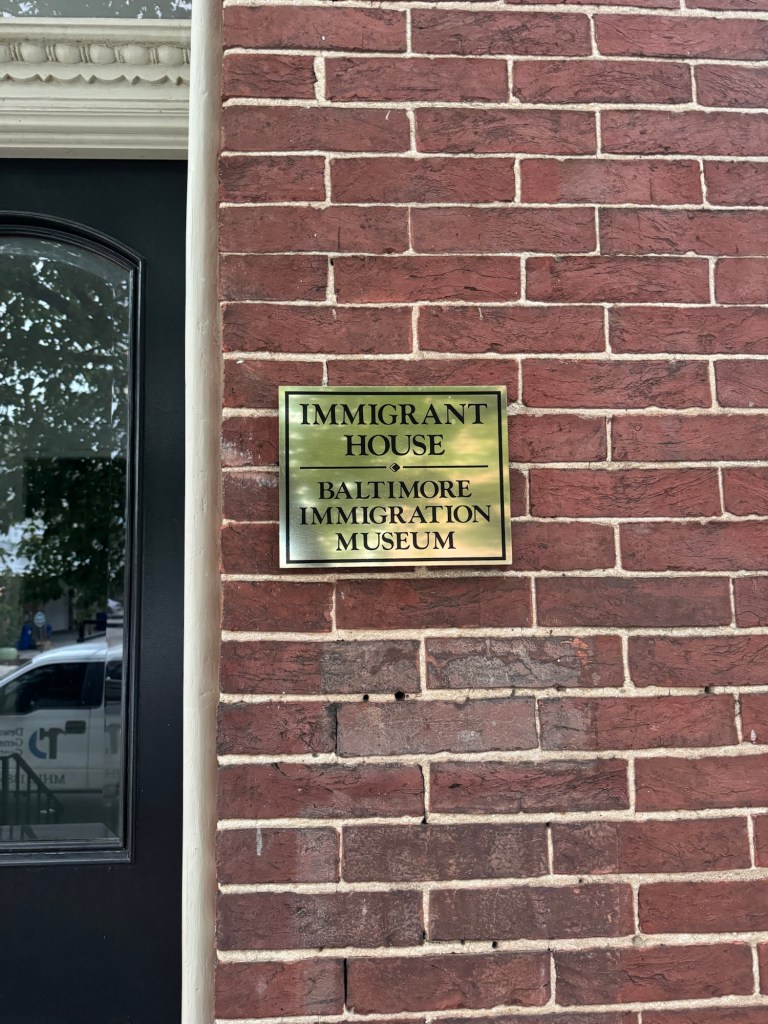
One local urban legend tells a strange tale which involves a German immigrant who found strange claw marks on the walls of his room at the Immigrant House and heard feverish cries coming from the closet. Finally, the man went to look into the closet of his room for the source of the sounds and was attacked and bitten by a werewolf hiding in wait! His torment only grew when he found out at the next full moon that he too had become something monstrous…a werewolf like the one who had bitten him. Some say his restless spirit still roams the streets, scratching at doors and howling into the night sky. Locust Point is famous for showing off big skies with oversized looking moons because of its flat landscape along the water’s edge.
Beware when the moon is full if you are out walking on the peninsula. The howling you hear may be more than the wind, but a werewolf descendent of the German immigrant who came to Locust Point.
Visit the museum’s website for hours of operation to learn more about the history and stories of the many immigrants who spent in Locust Point early in their American experience.
Or you can visit YouTube and watch this rather scary haunted house video made one year by Locust Point locals and parishioners of the German Church. It features the Immigrant House, the werewolf tale, and a few others you may have heard.
11. LP MYSTERIES
This historic neighborhood thrives today because of its significant past, but current day mysteries remain on the small peninsula in the heart of Baltimore.
First, many have long wondered what the purpose or significance of a tall tower next to Fort McHenry could be. It appears vacant because the windows look cemented closed, yet people have been spotted standing out on the balcony that wraps around the top of the building. Red lights blink constantly atop the structure, which appear to be a warning for aircraft or other flying objects, to not get too close and watch their altitude in the area. Property records shed little to no light on the building’s owner or other revealing details. Is the building part of a Homeland Security or NSA bunker network of secure locations, just a vacant old grain elevator, or part of the Fort McHenry tunnel ventilation system? Perhaps someone will speak up with more information about this mysterious tower looming over the neighborhood.


UFO/UAP SIGHTING
There is lots of sky watching to be had in Locust Point from the signature roof top decks that sit atop the neighborhoods brick row homes. While commercial airplanes, helicopters, and even the Blue Angels air show are common to see, a UFO/UAP sighting was recently reported in the skies above Locust Point and Port of Baltimore property. According to the National UFO Reporting Center website, a passenger aboard an airplane on June 13, 2024 reported a strange sight and uploaded a video of what they saw.

Perhaps these crafts are observing operations at the Port or have something to do with the mystery tower? Could it be a secret military operation that wasn’t supposed to be observed? Skeptics and believers can decide for themselves by watching the video uploaded to the website by the witness here.
LOCUST POINT FOX
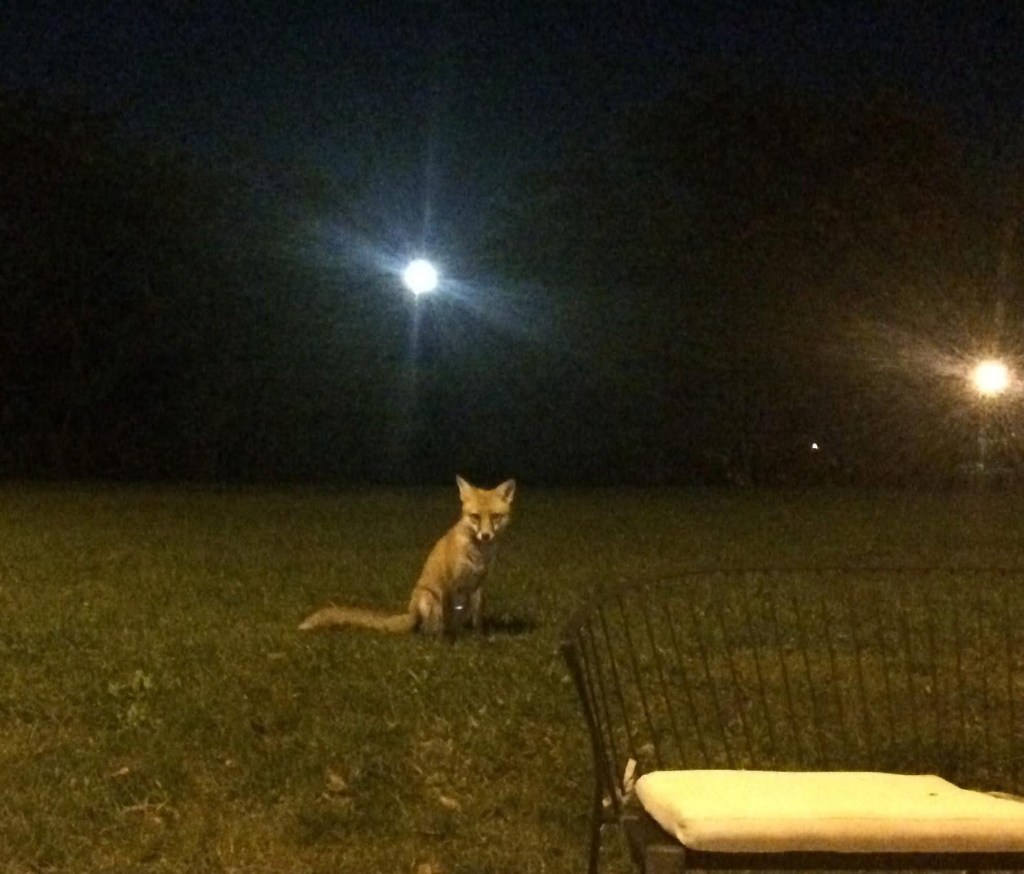
A mysterious fox, sometimes called the LP Fox or sometimes Dotty, has been seen wandering the streets and alleys of Locust Point for years. Caught on ring doorbell cameras and security cameras, he often has a shadowy, silver appearance. Some describe him as mangy or gaunt while others say he is spry. He will disappear for weeks and months, or even years, only to reappear again from the dark corners of the neighborhood. He wanders the neighborhood solitarily in search of something. Perhaps a mate but more likely prey. Beware of his watchful gaze if walking alone at night!
THE END
Thank you for reading about, and hopefully visiting, the many haunted or scary places in historic Locust Point. Please share any new ghost stories we should consider adding to the list of haunted spots in Locust Point. If you would like a guided tour of these spots for fun or a thrill, please reach out in the comments or email me for details at mariannepnavarro@gmail.com. If you would like to leave a tip for researching and sharing this info, you can find me on Venmo here. For more info on the sources used to compile this list of haunted, please visit this link for a complete listing. Happy Haunting! Oh and don’t for get to visit on Halloween! It’s one of the best neighborhoods around for trick-or-treating!
Sources can be found here.
By Marianne Navarro
Discover more from Charm Citizen
Subscribe to get the latest posts sent to your email.
 Charm Citizen